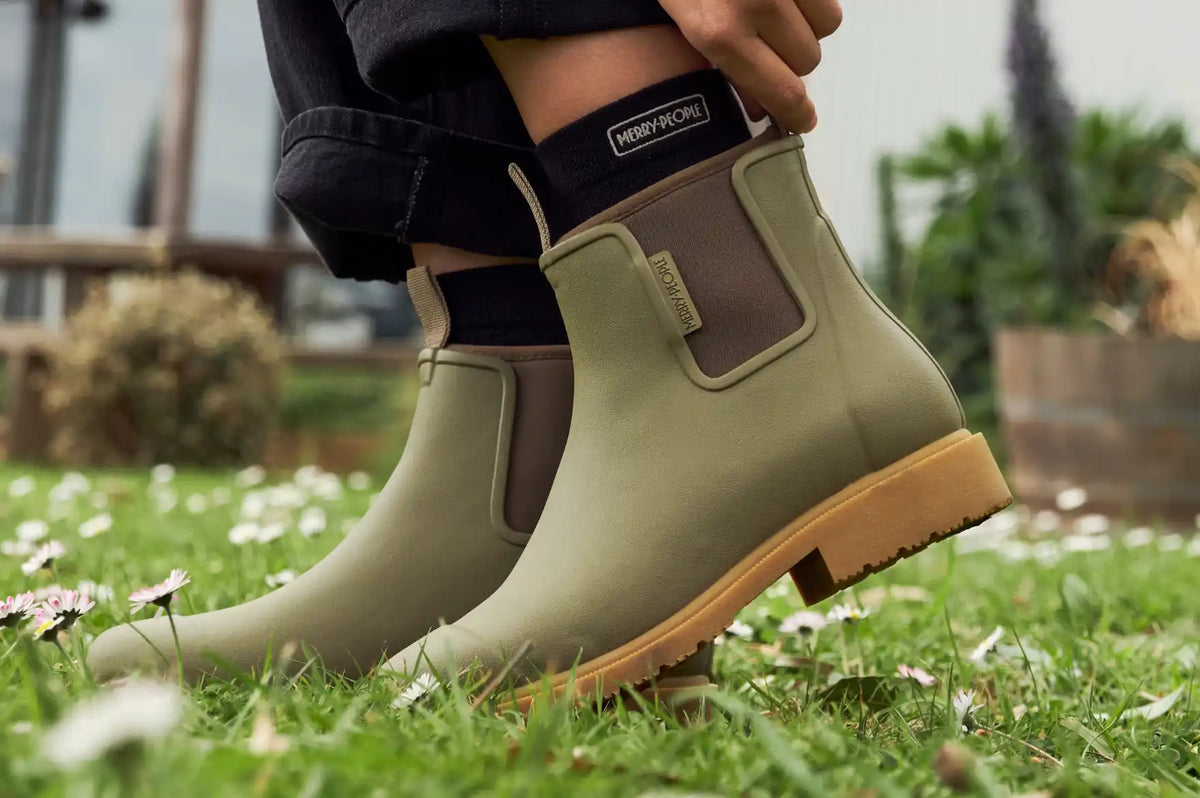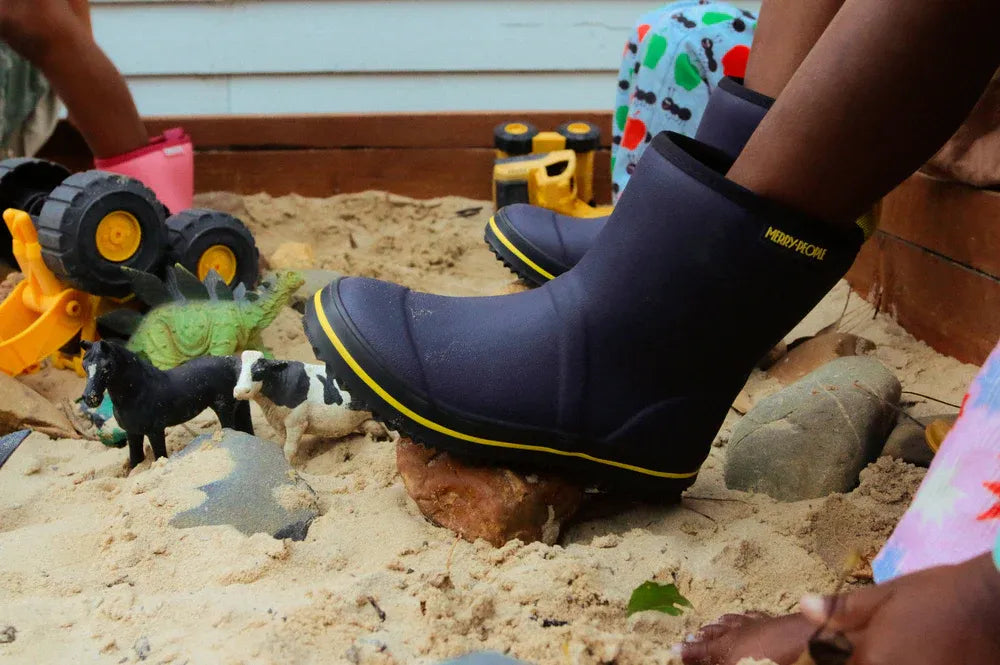




Can you wear wellies in the snow? Yes, for light snow, slush and short outings, as long as they're warm enough. A lined pair of wellies like ours keeps your feet dry and cosy on a snowy walk, but for deep snow, long days outdoors or icy trails, a dedicated snow boot is the better choice.
Wellies and snow boots both keep water out, but they're built for different conditions. Here's how they compare, and how to know which one you need.
What Makes a Snow Boot?
Snow boots are built for cold first and wet second. They usually have:
- Thick insulation, often rated for very low temperatures
- A tall shaft, often mid-calf or higher, to keep deep snow out
- A chunky sole with deep lugs for grip on packed snow
- Water-resistant or waterproof uppers, often with nylon, leather or synthetic panels
That extra insulation and bulk makes them warmer, but also heavier and less comfortable for everyday wear once the snow has gone.
What Makes a Welly?
Wellington boots are built to keep water out. They're usually made from rubber or PVC, which is 100% waterproof, and they're lighter and more flexible than snow boots.
Many wellies aren't lined, which means cold feet in winter. Ours are different. Every pair of Merry People wellies is made from natural rubber and lined with 4mm neoprene, the same insulating material used in wetsuits, and each style is tested in sub-zero temperatures.
Wellies vs Snow Boots at a Glance
| Wellies | Snow boots | |
|---|---|---|
| Waterproof | Yes, rubber is fully waterproof | Usually, but some are only water-resistant |
| Warmth | Varies. Unlined wellies are cold, lined wellies like ours are warm for everyday winter wear | Very warm, built for long periods in the cold |
| Grip | Good on wet ground and light snow | Built for packed snow, with deeper lugs |
| Height | Ankle to knee height | Usually mid-calf or higher |
| Everyday wear | Light and easy to wear all year | Heavy and bulky outside of snow season |
When Wellies Work in the Snow
A warm, lined pair of wellies is a great choice for:
- Light snow and slushy pavements
- Walking the dog, popping to the shops or the school run
- Short winter walks and ski trips where you're not on the slopes
- Wet, muddy winter days when snow turns to rain
For deeper snow, a taller welly like our Fergie tall wellington boot helps keep snow from getting in over the top. On ice, any boot needs extra care, so add ice grips (available at sports or outdoor shops) if you'll be walking on icy surfaces for long.
Want the details? Read are wellies good for snow and our guide to the best wellies for keeping feet warm.

Keep Your Boots Going Longer
Whichever boots you wear, let them dry fully after a snowy or wet day, wipe off mud and road salt, and store them somewhere cool and dry, away from radiators. Here's how to protect your wellies so they last.
So, Which Should You Choose?
If you live somewhere with heavy snow every winter, a snow boot is worth having. For everything else, from rainy spring days to frosty, slushy winter mornings, a warm, lined pair of wellies will cover you most of the year.